

When you cut embroidered patches, two questions matter: how will the machine locate each outline, and will the finished edge meet your requirements?
A recent inquiry asked for a 900 × 600 mm working area to cut embroidered fabric. The customer wanted to compare a system that reads all outlines before cutting with one that recognizes and cuts patches individually. They also wanted to know whether the edges would be complete and whether further finishing would be necessary.
Here is our proposed approach to that requirement.
Choose the machine size first
For a 900 × 600 mm working area, our starting recommendation is the LZ-9060L CO₂ Laser Cutting Machine, configured with an optional small CCD or line scan camera system.
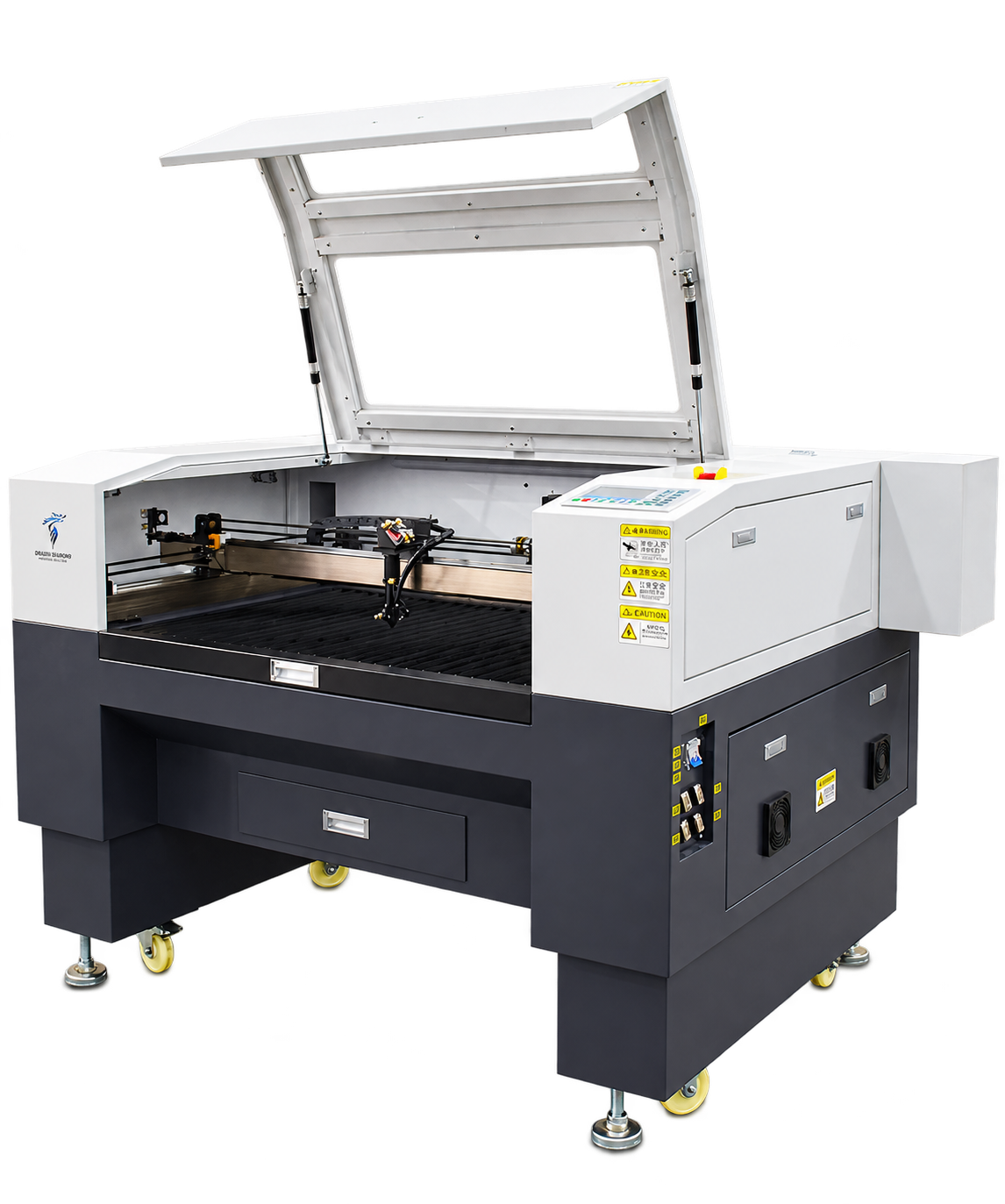
If your fabric layout needs a larger working area, consider a 1390 or 1610 model. Select the machine around the fabric layout, then choose the vision system around the embroidered patterns and recognition workflow.
Small CCD or line scan camera?
For the two configurations we offer, the key distinction is how patterns are recognized before cutting. The following comparison describes these proposed equipment packages.
| Selection point | Small CCD camera | Line scan camera |
|---|---|---|
| Workflow | Recognize and cut patches individually | Scan the outlines across the layout, then cut |
| Typical pattern layout | Consistent shapes with repeated features | Different shapes with multiple features |
| What to confirm | Reliable recognition of each repeated patch and the required cutting offset | Reliable capture of the different outlines across the actual layout |
Small CCD: recognize patches individually
For embroidered patches with consistent shapes and repeated features, the small CCD configuration is an option. The system recognizes an individual pattern and uses the corresponding outline for cutting before proceeding to the next patch.

Line scan camera: scan the layout before cutting
For layouts containing different shapes or multiple features, the line scan configuration is an option. The system scans the layout to capture the outlines before carrying out the cutting sequence.

The videos illustrate these cutting workflows. The final camera selection should be confirmed using your material and full embroidery layout.
Will the edges be complete? Will further finishing be needed?
Those questions require an actual sample test. We would not confirm that a patch is ready to use directly after cutting based on a video alone. Fabric, embroidery thread, backing, adhesive layers and your required finish need to be evaluated together.
During a sample test, check:
- Cut-through: Is the full outline separated, without uncut connections?
- Contour alignment: Does the cut follow the intended outline without damaging the embroidery?
- Edge appearance: Are discoloration, residue and the feel of the edge acceptable?
- Finishing: Is trimming or another finishing step necessary for your product?
- Cycle time: How long do recognition and cutting take for a representative layout?
The video stills above show the cutting process. They are not a close inspection of a finished edge or the results of testing this customer's material.
Our proposed configuration
For the 900 × 600 mm requirement: LZ-9060L CO₂ laser cutting machine + optional small CCD or line scan camera.
Start with small CCD for consistent, repeated patterns, or consider line scan for layouts containing different outlines and multiple features. Consider a 1390 or 1610 machine when a larger working area is needed. Confirm the complete camera, controller and software package—and the expected finish—through layout review and sample testing.
Find a configuration for your embroidered patches
Send us photos of your embroidered fabric and backing, individual patch dimensions, a full layout photo, your required working area and daily production needs. Include a close-up example of the edge finish you want.
Dragon Diamond can use these details to recommend a machine size and vision configuration, then evaluate the cutting result through sample testing.